Building and history
Ca' Pesaro - International Gallery of Modern Art
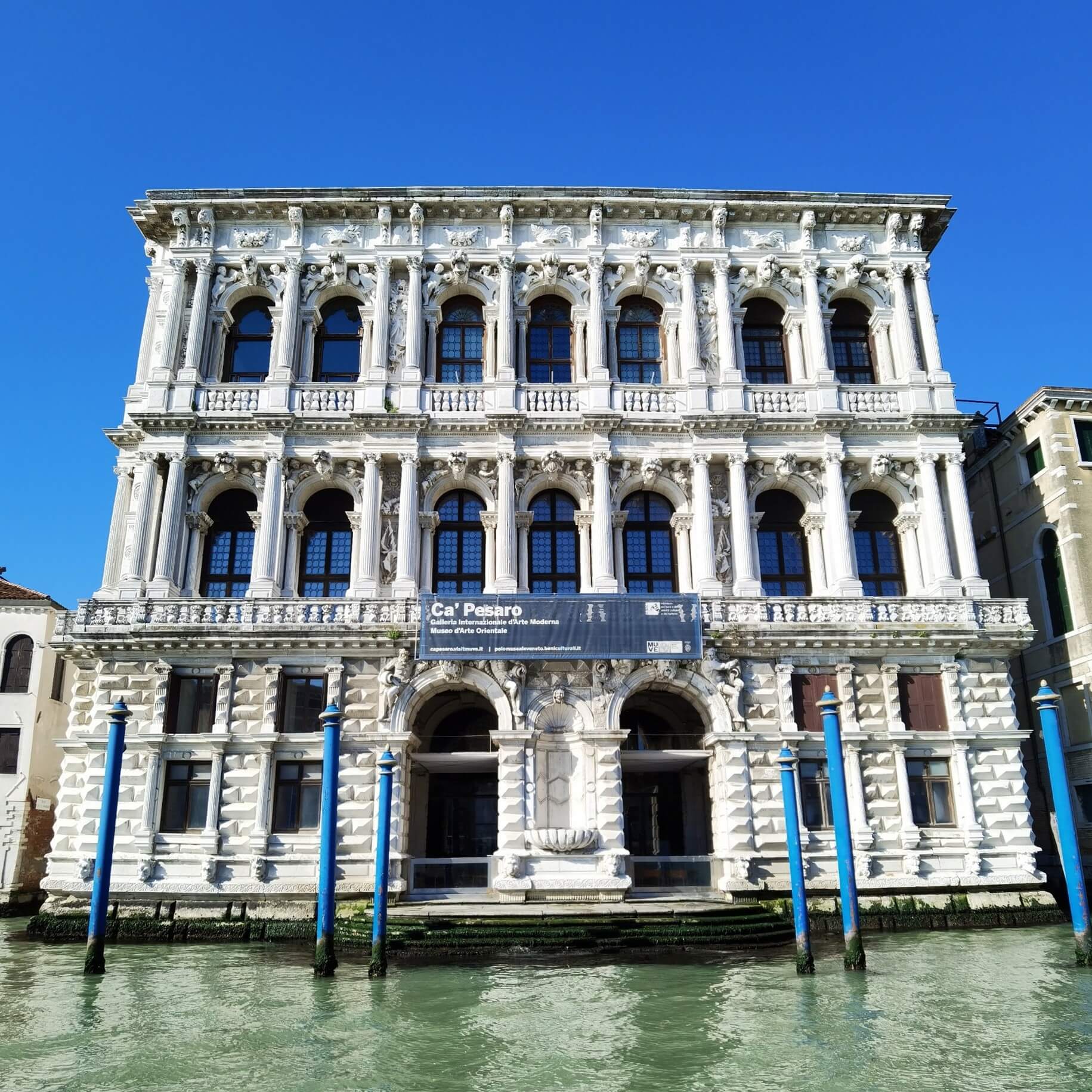
The Galleria Internazionale d’Arte Moderna – International Gallery of Modern Art – is housed in the magnificent palazzo di Ca‘ Pesaro, which was built in the second half of the seventeenth century at the behest of the noble and wealthy Pesaro family. The design is by Venice’s leading baroque architect of the time, Baldassare Longhena; it was he who designed the Basilica of Santa Maria della Salute church and Ca‘ Rezzonico.
The building combines Longhena’s architectural monumentality with a centuries-old history of patronage, culminating in its donation to the city of Venice by Duchess Felicita Bevilacqua La Masa to become a cultural centre of global importance. In his design for Ca‘ Pesaro, Longhena was inspired by the classicism of one of the masters of the Italian Renaissance in Venice, Jacopo Sansovino, the result is a sumptuous yet harmonious building overlooking the Grand Canal, one of the masterpieces of Venetian baroque.
Longhena's design and the completion of the palace
Construction of the palace began in 1659 for the noble Pesaro family. The project was entrusted to Baldassare Longhena, a leading figure in Venetian baroque architecture and the architect of the Basilica of Santa Maria della Salute.
Work progressed rapidly, starting from the ground floor; by 1679, the sumptuous façade had reached the second floor, but upon the architect’s death in 1682, the palace remained unfinished. It was Gian Antonio Gaspari who completed the construction in 1710, respectfully following Longhena’s original design and ensuring the overall harmony of one of the city’s most impressive palaces.
The architecture: a mix of classicism and baroque
In designing Ca‘ Pesaro, Longhena reinterpreted Jacopo Sansovino’s classicism, creating a sumptuous and balanced architecture.
The façade overlooking the Grand Canal is a triumph of detail: a plinth decorated with lion heads and monstrous figures supports a diamond-pointed rustication of extraordinary three-dimensional vigour. Two rows of windows punctuate the upper floors, flanking the twin central portals surmounted by imposing masks and statues.
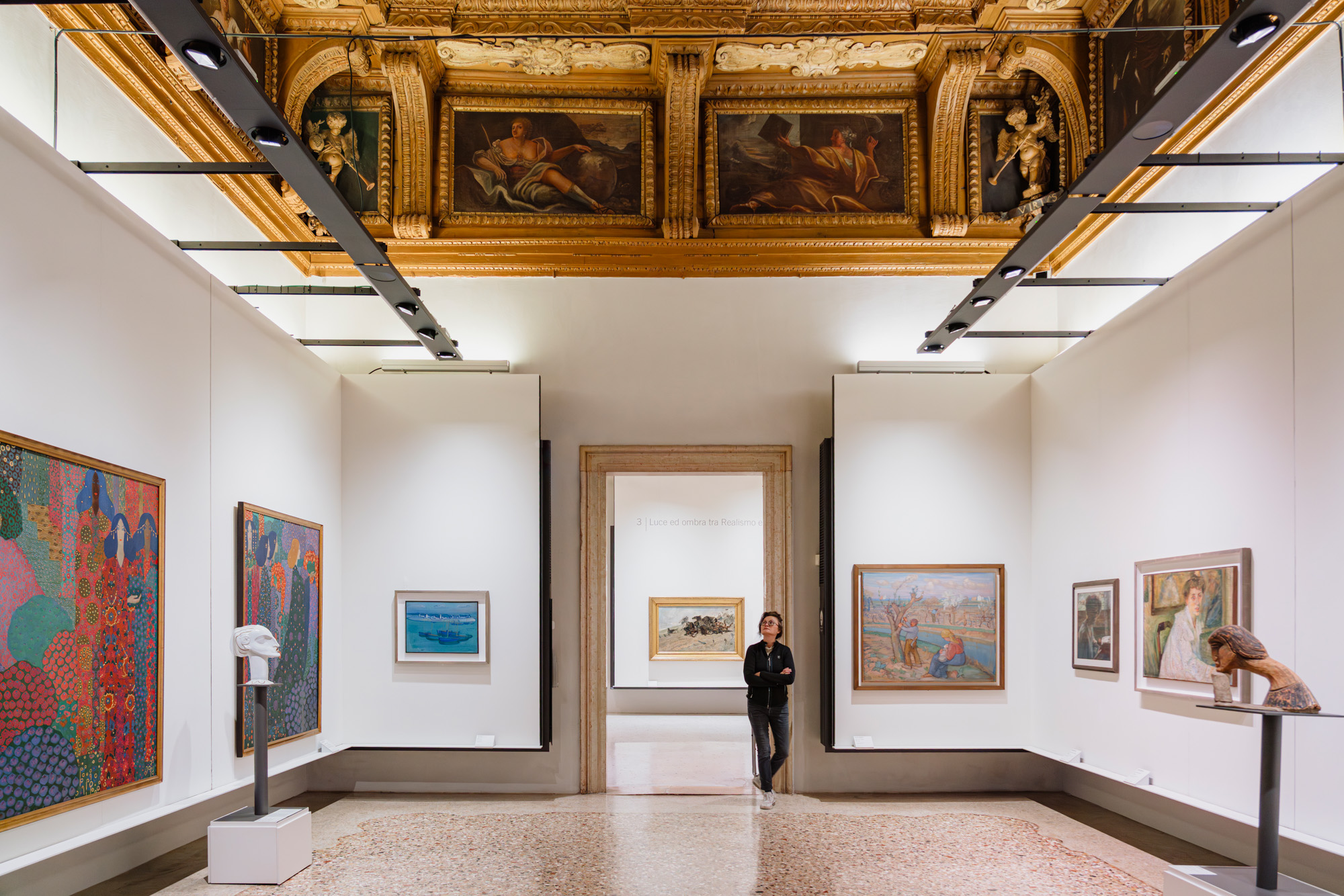
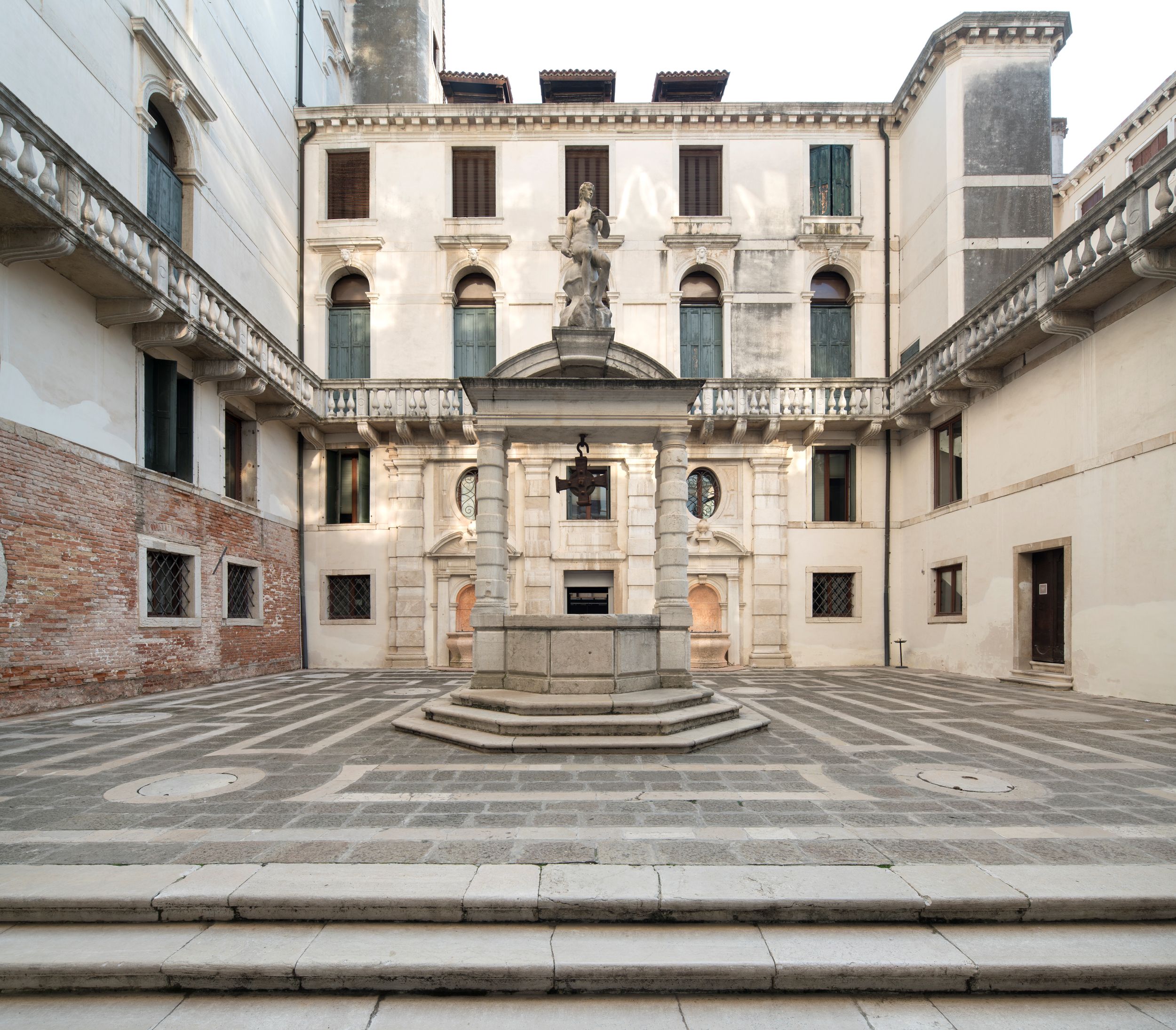
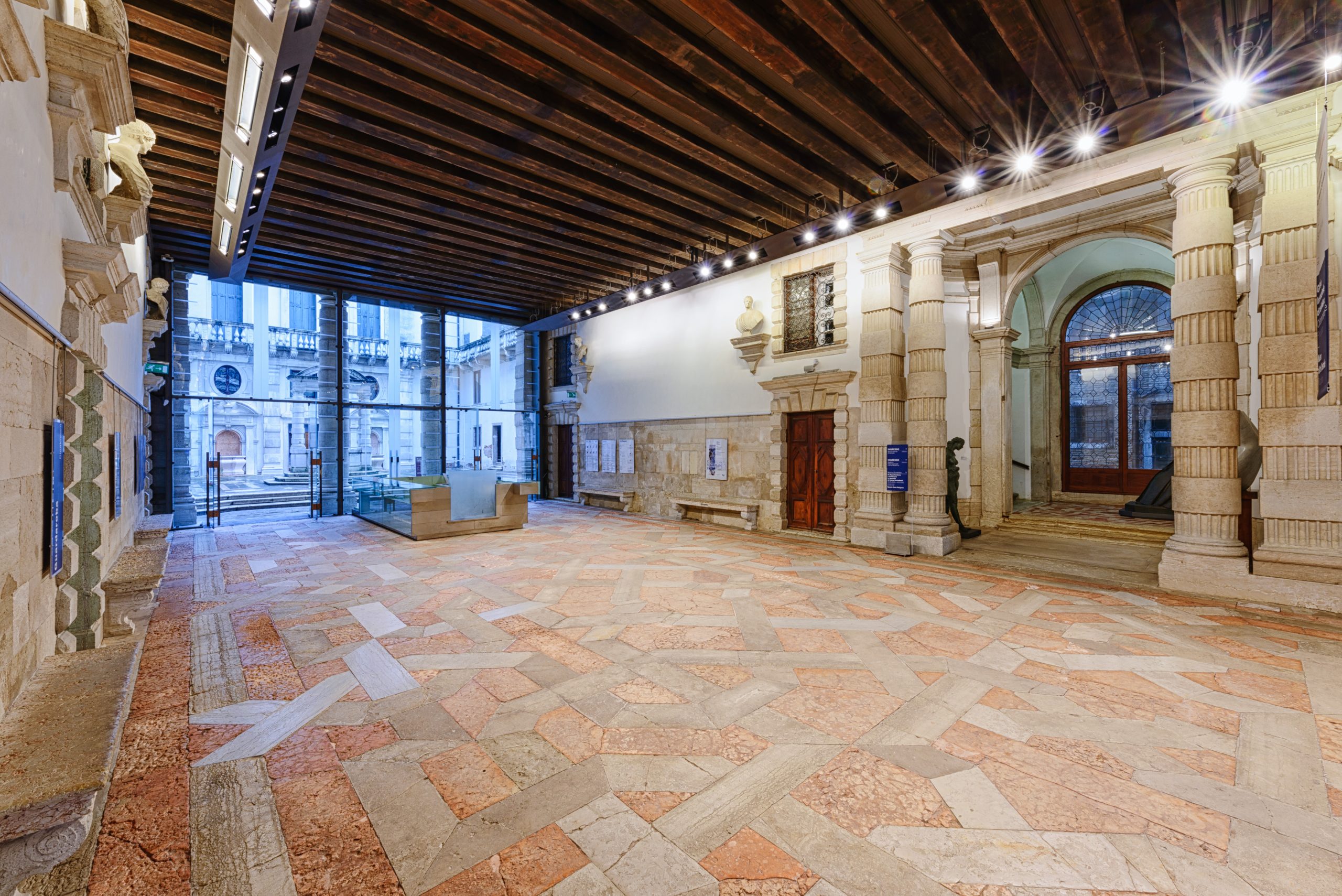
Inside, the majestic androne – or entrance hall – crosses the building, connecting the water to the courtyard, where the monumental wellhead is located. The interior of the palace reflects the splendour of the Pesaro family, with ceilings decorated by masters such as Bambini, Pittoni, Crosato, Trevisan, Brusaferro and Tiepolo, whose Zephyr and Flora has been preserved at Ca‘ Rezzonico since 1935.
From the Pesaro family to the birth of the Civic Museum
After the death of the last heir in 1830 and the subsequent dispersal of the collection, the palace passed first to the Gradenigo family and then to the Armenian Mechitarist Fathers.
Ultimately, at the end of the nineteenth century, it was purchased by the Bevilacqua family, and the monumental palace became the property of the Duchess Felicita Bevilacqua La Masa. In 1898, in accordance with her will, the building was donated to the City of Venice to promote modern art, with the explicit request that studios and exhibition spaces be set aside for young emerging artists. In 1902, the City of Venice officially designated Ca‘ Pesaro as the home of the Gallery of Modern Art.
Between 1908 and 1924, the mezzanine hosted the historic Bevilacqua La Masa exhibitions, which represented an alternative to the Venice Biennale and promoted the talent of a new and young generation of artists.